

From Admissions to Discharge: The Case for End-to-End Coordination
What if you could reduce the average patient stay by four hours, cut ED boarding times significantly, or shave dozens of minutes off the time it takes nurses to coordinate a transfer? These improvements are not hypothetical. They are being achieved today at hospitals using RTLS-enabled patient flow solutions, and the financial and clinical returns are well documented.
The pressure to optimize patient throughput has never been greater. According to Sg2’s 2024 Impact of Change report, annual inpatient days are projected to reach 170 million by 2034 — a 9% increase from current levels — with high-acuity days rising 13%. ED visit volumes are set to climb to 125 million annually within the next decade. Hospitals are being asked to handle more patients, with more complex needs, in the same physical footprint, and often with fewer staff. In this environment, operational efficiency is not a back-office concern. It is a front-line clinical and financial imperative.
The areas with the greatest opportunity for improvement are consistent across health systems:
- Wait times in admissions and the ED
- Delays in handling patient transfers
- Wasted time locating equipment
- Slow or poorly coordinated patient discharge
- Inefficient environmental services turnaround
RTLS addresses all of them — from a single platform that deploys on existing infrastructure in days, not weeks.
Reducing ED Boarding and Patient Wait Times
Prolonged ED boarding — where admitted patients wait in the emergency department for an inpatient bed — has serious and well-documented clinical consequences. A widely cited study found that mortality rates increased from 2.5% in patients boarded fewer than two hours to 4.5% in those boarded 12 hours or more. AiRISTA’s patient flow solution deployment data shows that emergency department wait times of six to eight hours increase mortality rates by approximately 8% on average. According to Becker’s Hospital Review, the majority of emergency medicine physicians report experiencing boarding times exceeding 24 hours in their facilities, and at some institutions boarding numbers regularly approach the total number of available ED beds.
Real-time location data changes what’s possible. Hospitals that deploy RTLS-enabled patient tags through AiRISTA’s Sofia® platform can monitor wait times continuously, trigger automated alerts when thresholds are exceeded, and notify patients of bed availability directly to their wearable tag — allowing patients to move freely through the hospital rather than sitting in a waiting room. That last capability is more significant than it sounds.
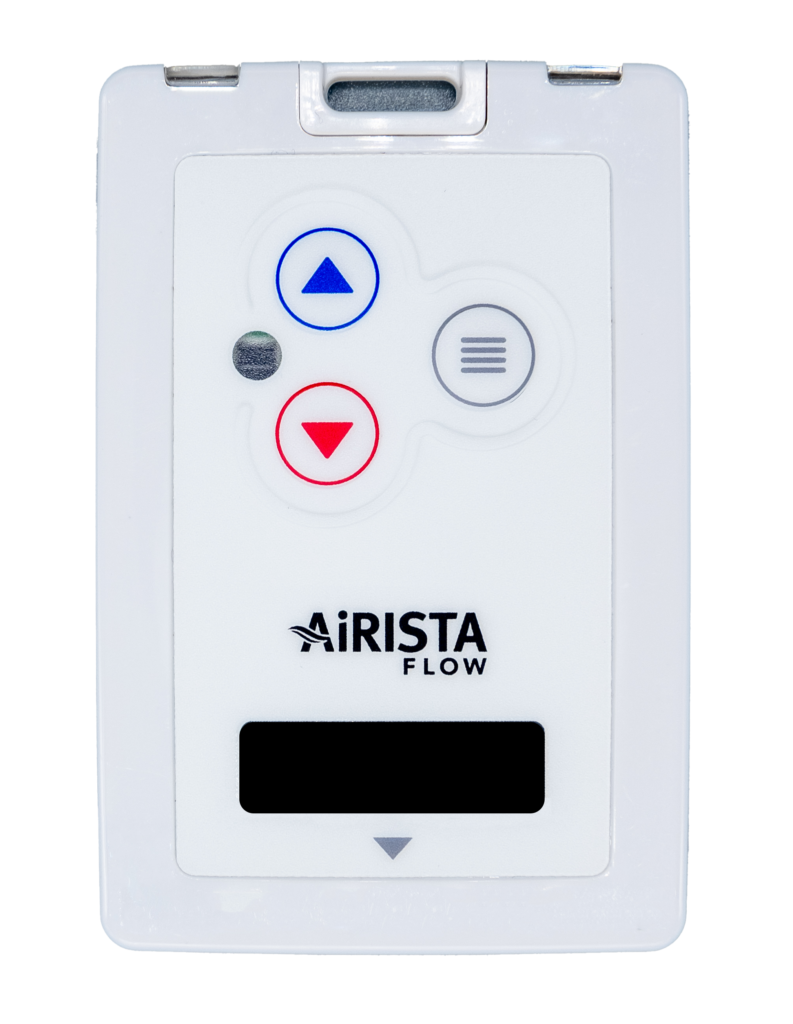
A large academic medical center cancer facility uses AiRISTA’s B4n badge tags so that patients can move freely through campus gardens, chapels, and outdoor spaces while waiting for their appointment or care team. When a new exam room or bed becomes available, the patient’s tag receives a direct notification — eliminating the need to confine patients to a waiting area and resolving one of the most persistent friction points in the patient experience.
Capio St. Göran Hospital in Stockholm similarly uses AiRISTA’s B4n messaging tag to manage surgical waiting patients, with outcomes including reduced delays, improved throughput, and measurably higher patient satisfaction scores. The B4n’s two-way messaging capability — allowing the platform to push notifications directly to the patient’s wearable — is what makes this proactive coordination possible rather than reactive.
Improving the Efficiency of Patient Transfers
One of the most direct places to recover time in the patient journey is transport and transfer coordination. The typical transfer process involves a nurse identifying the need, contacting portering staff by phone or overhead system, waiting for confirmation, and manually tracking completion — a sequence that introduces delays at every step and pulls nursing attention away from patient care.
AiRISTA’s partner deployed a workflow solution using AiRISTA’s B4n personnel tags integrated with the Sofia™ platform. Nurses press a button to initiate a transport request, and the partner’s application uses real-time RTLS location data to automatically dispatch the nearest available porter — functioning like a real-time dispatch service built on location intelligence. Once complete, the porter closes the request with a button press, timestamping the event automatically and feeding the data back into the platform for analytics.
Results from an Ernst & Young study of the Manipal Hospitals deployment: turnaround times reduced by 40% (from 50–60 minutes down significantly); patient assistant efficiency improved by up to 70%; operational costs fell by 36%. Monthly impact: 11,353 porter requests handled, 777 hours saved through efficiency gains, and 130,000 minutes of nursing time recovered per month — approximately 2,167 nursing hours that returned to direct patient care.
This Uber-style dispatch model, powered by real-time location data from AiRISTA’s platform, removes the guesswork and manual coordination that typically slow transfers and impose coordination burden on nursing staff. Multiplied across a full month of operations, the nursing time recovery alone represents a meaningful workforce capacity gain.
Accelerating Patient Discharge
Patient discharge is among the most coordination-intensive processes in a hospital. It requires simultaneous management of the patient, family members, clinical staff, porters, and environmental services, and a delay at any point can cascade into hours of idle bed time. Research on discharge automation shows that on average it takes 4.4 hours to turn around a patient bed, yet only 43 minutes of that time involves actual cleaning and resetting. The remaining time is wasted waiting, with staff unaware of status changes, or coordination failing to happen at the right moment.
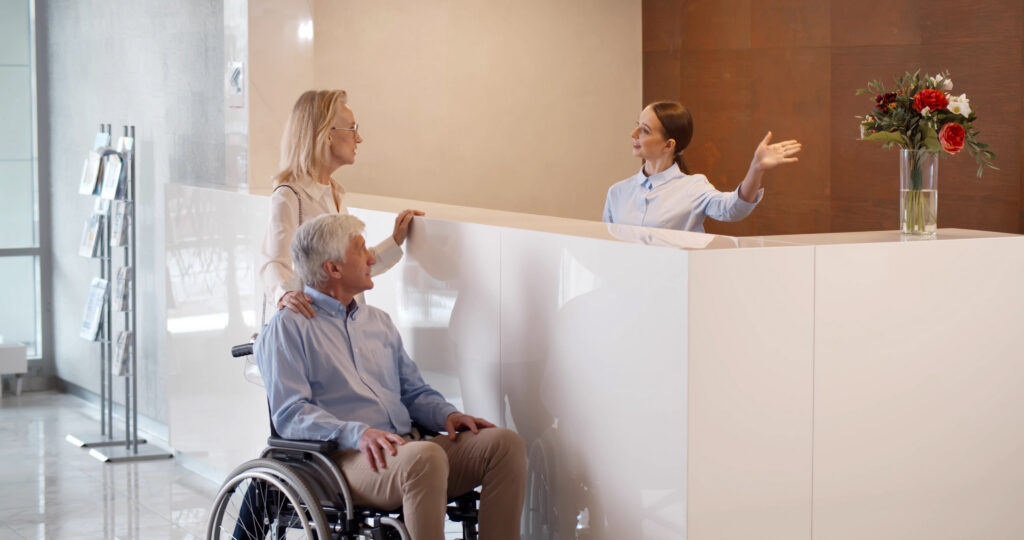
RTLS eliminates that waste by automating the triggers that set the discharge chain in motion. With AiRISTA’s platform, an orchestrated discharge workflow executes like this:
- A porter is alerted automatically and directed to the nearest wheelchair via real-time location data
- An event trigger detects when the patient physically leaves the room
- Environmental services receive an immediate dispatch notification
- The room returns to an “available” state once cleaning is confirmed
This level of automation removes the manual communication steps that account for most of the delay. The IHI has calculated that a 275-bed hospital that reduces average patient stay by just four hours accomplishes the operational equivalent of adding ten physical beds. At an average daily patient cost of $2,000, that translates to a potential annual revenue increase of $7.3 million — without constructing a single new room or expanding physical capacity.
Discharge delays are also growing more expensive due to payer dynamics. According to the AHA’s 2025 Cost of Caring Report, the average length of stay for Medicare Advantage patients before discharge to post-acute care has more than doubled relative to Traditional Medicare since 2019, while hospital reimbursement from those plans has fallen. Hospitals that can accelerate discharge processes are recovering real margin, not theoretical efficiency.
What the Platform Makes Possible Across the Full Journey
Each of the use cases above delivers value individually. The compounding effect comes when they share a common platform and a common data layer. AiRISTA’s platform — delivered on-premises or from the cloud, deployable on existing Wi-Fi infrastructure — supports patient flow management as a unified system rather than a collection of point solutions.
Sofia™ supports integrations with EHR systems, nurse call systems, and building management platforms, creating a unified operational picture that spans the entire patient journey. Outcomes hospitals have achieved through AiRISTA’s patient flow platform include:
• 70% efficiency improvement for porters through automated workflows
• Reduction in nurse time supporting patient portering from 40 minutes to 5 minutes per transaction
• Real-time visibility into waiting times, movement times, and cleaning times by functional area, with configurable alerting and automation rules
• Reduction in asset loss with utilization improvements of up to 25%
• Reduced congestion in waiting areas through proactive patient notification
The BLE wrist tags and badge tags used for patient tracking — including the B4n, eTW2 wrist tag, and A-Series pendant tags — are comfortable, durable, and designed for multi-year battery performance in clinical environments. Two-way messaging capability allows the platform to push proactive notifications to patients and staff, enabling the kind of coordinated, anticipatory workflow that reactive systems cannot support.
From Tracking to Prediction: The RTHS Maturity Curve
AiRISTA’s approach to patient flow is grounded in a progression that mirrors how leading health systems think about operational intelligence. Gartner’s Real-Time Health System (RTHS) Maturity Model evaluates an organization’s ability to acquire and act on real-time operational data, with patient throughput and capacity management identified as defining characteristics of organizations at the more advanced maturity levels.
At early stages of the model, organizations are reactive — monitoring events after the fact. At more advanced levels, workflows are automated and the organization becomes predictive, anticipating bottlenecks before they develop and orchestrating resources in response. Sofia™ is built to support this entire progression. Starting with location-aware tracking of patients, staff, and equipment, the platform adds workflow automation through configurable event triggers and alerts, and then integrates with EHR and other hospital systems to create the unified operational picture that defines a true Real-Time Health System. Organizations that begin with basic patient tracking can expand into fully orchestrated discharge automation and predictive capacity management as their operations mature — without replacing the infrastructure they started with.
The ROI Is Proven. How Quickly Will You Move?
As health systems face continued pressure from rising inpatient volumes, tightening margins, payer dynamics that punish length of stay, and a workforce that cannot simply be scaled up, orchestrated patient flow is one of the clearest paths to measurable, defensible ROI. The technology is proven. The use cases are well-defined and replicated across hospital systems globally. The financial case — whether measured in nursing hours recovered, beds effectively added, or revenue protected from avoidable delays — is consistently compelling.
The question is not whether to invest in patient flow optimization. It is how quickly an organization can move along the maturity curve from reactive tracking to intelligent, automated orchestration.

Improve Patient Flow with Real-Time Coordination
AiRISTA’s RTLS-powered patient flow solutions help hospitals reduce delays, improve transfer coordination, and optimize throughput from admission to discharge with real-time operational visibility.
Schedule a consultation: salesinfo@airista.com | 1-844-816-7127
Sources
Sg2 Impact of Change Report (2024); Becker’s Hospital Review, Hospital Capacity in 2025 (June 2025); Singer et al., “The Association Between Length of Emergency Department Boarding and Mortality”; IHI White Paper, Achieving Hospital-Wide Patient Flow (2020); Kontakt.io, The ROI on Discharge Automation (2024); AHA 2025 Cost of Caring Report; Ernst & Young study on Manipal Hospitals porter efficiency (IceGen/AiRISTA deployment); Gartner, Patient Throughput and Capacity Management; AiRISTA, Hospital Patient Flow Solution Outcomes Data; AiRISTA, Capacity Management White Paper.
About The Author


