

Getting Started with an RTLS Project.
As wireless infrastructure has matured and location technology costs have continued to fall, RTLS solutions keep getting less expensive, faster to deploy, easier to manage, and applicable to a wider range of use cases. Today’s deployments span Wi-Fi, Bluetooth Low Energy, and hybrid architectures — giving organizations more flexibility to match technology to their specific environment and use case requirements than ever before. Organizations considering their first RTLS project need a clear picture of the steps between a business case and a working solution. The market reflects that demand: the global RTLS market is estimated at $8.85 billion in 2026 and is projected to reach $25.85 billion by 2031, growing at a 23.91% compound annual rate.
The most successful RTLS deployments begin with a cross-functional team that describes the target problem succinctly, the desired outcome, and the metrics used to define success. That team reports to an executive sponsor who ensures funding and organizational support, and the team appoints an individual responsible for ongoing RTLS management once the system is live.
Selecting a vendor
Vendor selection shapes every downstream decision — infrastructure architecture, deployment timeline, total cost of ownership, and the organization’s ability to expand use cases over time. Evaluate candidates against these six criteria before committing:
Deployment and hosting model
Cloud-based RTLS platforms are increasingly common for new deployments, relieving the organization of ongoing maintenance, patching, and infrastructure management overhead. Organizations with specific data sovereignty or security requirements may still prefer on-premises deployment. Confirm that the vendor supports both options and can accommodate a migration path between them as needs change. AiRISTA’s Sofia® platform is available on-premises, in a private cloud, or as a SaaS deployment, allowing health systems to align with their own compliance and IT requirements.
Pricing structure
Subscription pricing reduces initial capital outlay and scales proportionally with deployment scope. Many organizations are actively shifting capital expenditure to operating expenditure to reduce balance sheet impact. Modular, use-case-based licensing — paying for asset tracking, staff safety, or patient flow independently — allows organizations to start with a defined scope and expand without renegotiating an enterprise contract.
Location accuracy relative to use case
Not every workflow requires the same precision, and over-specifying accuracy drives unnecessary infrastructure cost. A properly designed and calibrated Wi-Fi RTLS deployment can support zone-level and, in some environments, room-level workflows. Staff safety or room-level use cases should be validated against AP density, calibration quality, latency, and coverage requirements. Define the accuracy requirement for each use case before evaluating infrastructure, not after.
Mission criticality and architecture
The criticality of the target use case directly shapes architectural requirements. A staff duress system that must respond in seconds under any network condition requires different redundancy design than an asset utilization reporting tool. Clarify upfront whether the use case requires on-premises data processing, cloud processing, or a hybrid model — and confirm the vendor’s architecture supports the required failover behavior.
Battery management strategy
Tag battery life is a function of technology, chirp rate, and reporting interval — not just the manufacturer’s rated specification. A BLE tag reporting its location once per minute can last several years on a single battery; a tag configured for frequent updates or two-way communication will drain faster. At enterprise scale, battery replacement logistics carry real labor cost. Confirm the vendor’s battery management approach, including automated low-battery alerts and the realistic battery lifecycle under your intended configuration.
Tag cost and tracking economics
The cost of the tag determines what is economically practical to track. A tag priced for infusion pumps may not justify tracking beds, wheelchairs, or lower-value items at scale. Confirm the vendor’s tag price points across their full hardware range support the complete scope of assets you intend to track — not just the high-value equipment that justifies the initial business case.
Deployment steps
Once objectives are well defined and a vendor is selected, a structured deployment process minimizes disruption and compresses time to value. The following steps apply across most RTLS deployments regardless of use case or environment.
Map Management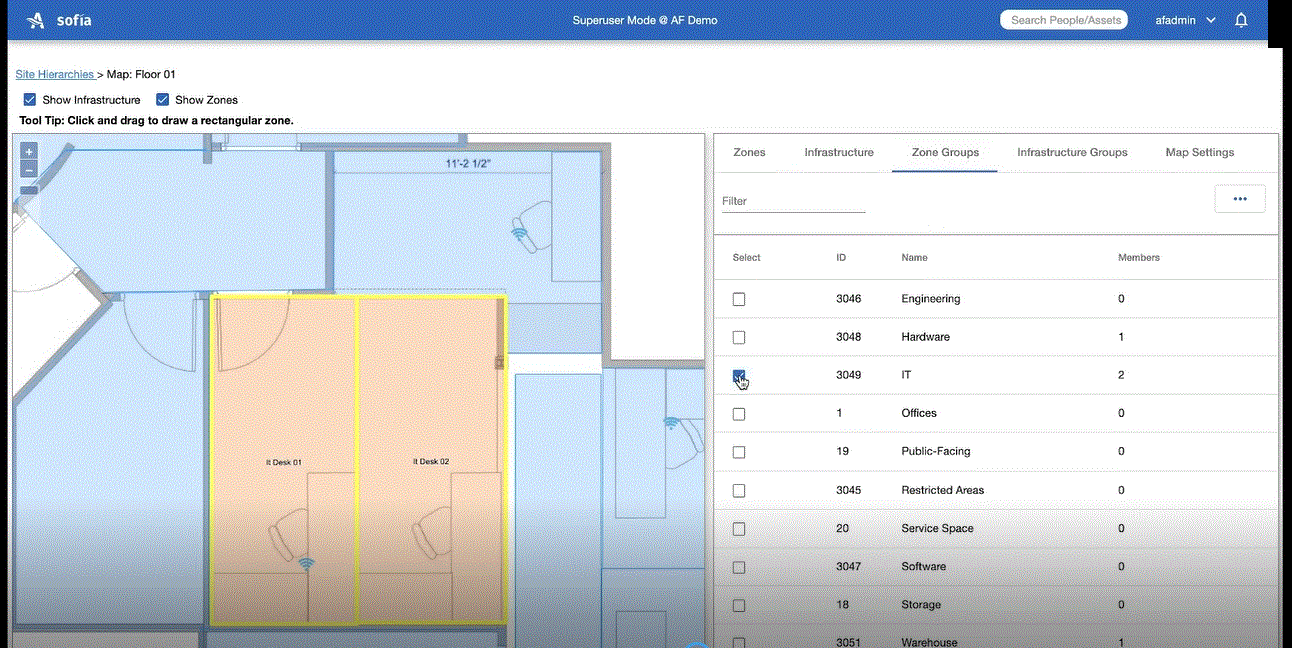
Maps are the visualization foundation for every RTLS use case, whether based on GPS coordinates or floorplan image files. Because the same floorplans are used across multiple applications, centralizing them into a single authoritative source from the outset prevents duplication and version control problems downstream. AiRISTA’s Sofia™ platform can automatically import floorplans from third-party sources like Cisco Spaces, or accept user-provided map files directly.
Many use cases depend on zones drawn onto a floorplan to monitor movement and dwell time — room entry and exit detection, par level monitoring, restricted area alerts. The platform should support both uploading existing zone definitions and drawing new ones by hand, without requiring technical expertise. Maps should be organized hierarchically by floor, building, and campus to support multi-site deployments and enterprise-wide reporting.
Infrastructure Setup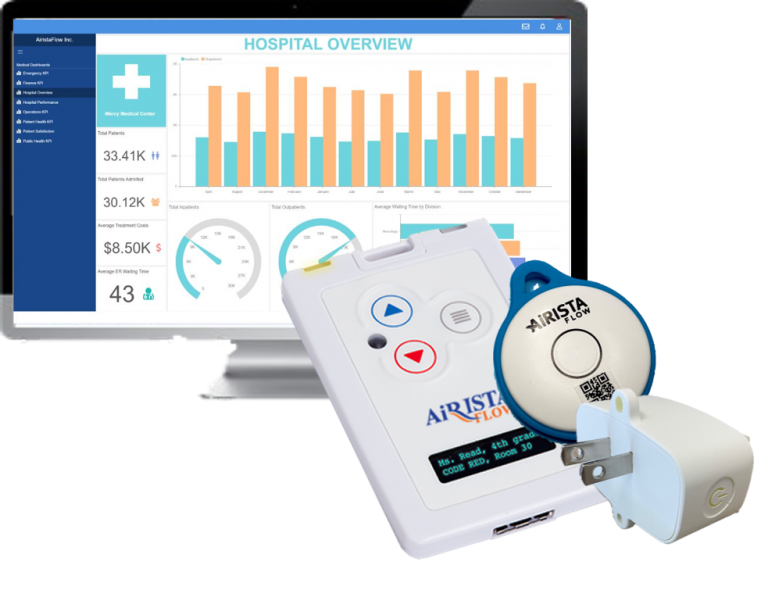
In many deployments, existing wireless access point infrastructure can support location determination without additional hardware. Wi-Fi access points in an RTLS-grade deployment can deliver room-level accuracy with a calibrated location model. Where higher accuracy is required, or where existing access points do not include BLE support, overlay BLE gateway devices can augment the environment.
AiRISTA’s BLE gateways range from simple location anchors to compact devices combining Wi-Fi and BLE capability. Deployment is straightforward: scan the device barcode with a mobile phone to capture its identifier, then place it on the floorplan with a click. BLE angle-of-arrival infrastructure — which uses overlay readers with micro-antennas to detect differences in signal arrival angle — provides sub-meter accuracy and vertical dimension tracking for use cases that require it, such as high-density stock rooms or specific procedural areas.
Tag Configuration
Tags and their unique identifiers — typically MAC addresses — are uploaded to Sofia® via file or added individually, as is common for visitor or short-term tags. Associating a tag with a person or asset is done using a mobile scanning app that autofills fields on a software form, eliminating manual data entry at scale.
Where supported, tag settings can be configured or updated over the air after tags are reachable through the appropriate maintenance/configuration path. Configurable parameters typically include BLE settings, beacon rates, reporting intervals, sleep and wake parameters, LED behavior, and button functions. Two-way communication tags — such as AiRISTA’s B4n — can also be configured to receive notifications and display messages, supporting use cases like patient flow coordination and porter dispatch.
Workflow Setup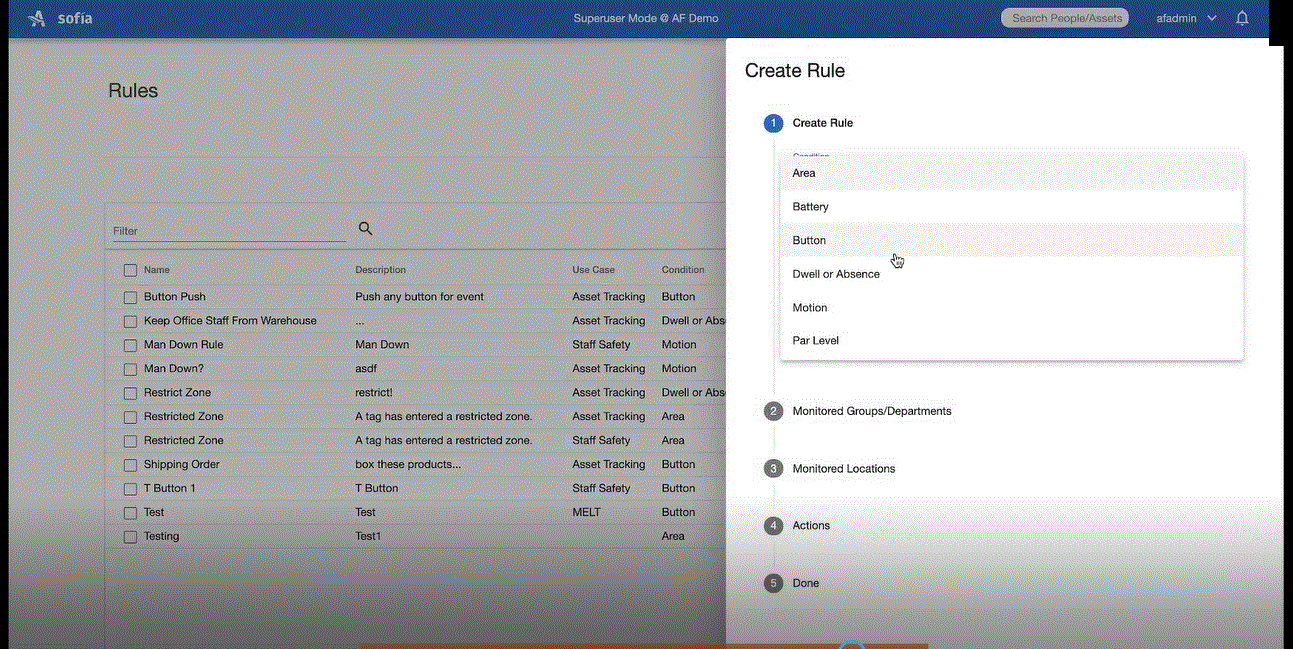
Locating a resource in the moment is a fraction of the value a well-deployed RTLS solution should deliver. The deeper value comes from using location data to drive operational processes: inventory management, smart pathing, contractor oversight, utilization tracking, and automated alerts for dwell time thresholds or par level conditions.
AiRISTA’s Sofia® platform allows non-technical staff to build workflows through a rules-based configuration environment using drop-down menus — no code required for the majority of use cases. Rules can trigger on location counts, process steps, button presses, or sensor readings. REST and streaming APIs support deeper customization and integration with third-party applications and physical devices such as security cameras and nurse call systems for organizations with more complex integration requirements.
Reports & Dashboards
Reports create the objective basis for measuring success against the metrics defined at project outset — asset utilization rates, route efficiency, turnaround times, temperature deviations, staff response times. Automating report delivery to the extended team ensures that the data reaches the people responsible for acting on it without requiring manual pulls. Dashboards provide at-a-glance visibility into current state and trends; they should be customizable in what they display and flexible in how they present it, so that different operational stakeholders can configure views relevant to their role.
 System Debug
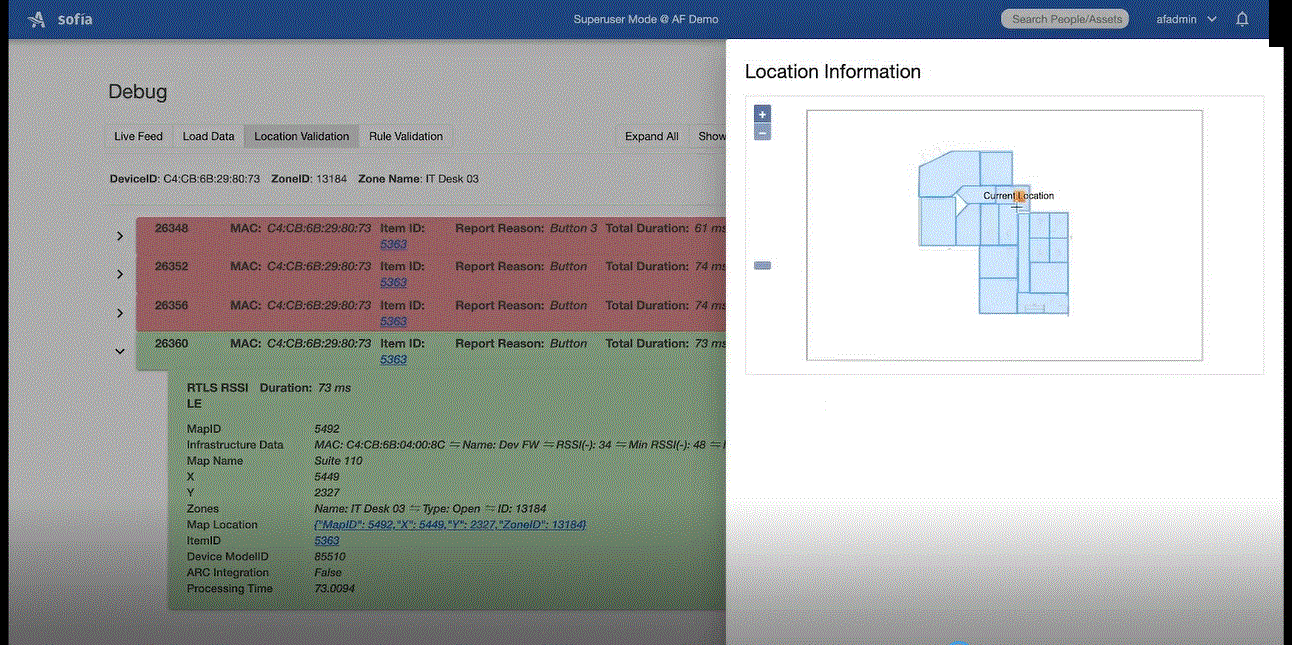
Debugging begins during installation and should remain available as an ongoing troubleshooting tool, both locally and remotely. Access to raw tag data and radio signal levels helps resolve issues during deployment — including adjustments to output levels and receiver sensitivity — without requiring on-site vendor support for every configuration change. These data streams can be exported and shared with AiRISTA’s support team for remote troubleshooting, helping identify and resolve zone overlaps and floor-hopping errors before they affect production use.
The ability to validate location accuracy on demand — pressing a tag’s button and confirming its location appears correctly on the floorplan — resolves what has historically been one of the more persistent operational challenges in RTLS deployments. Sofia’s debug and validation tools can help compare expected and observed tag locations during testing, allowing configuration issues such as zone overlap or floor hopping to be identified and corrected
System Management
User roles determine who has access to management functions — user administration, tag assignment, infrastructure configuration, and settings maintenance. Automated alerts should notify administrators of low battery levels, missing tags, and infrastructure issues before they affect system performance. Intuitive management tools allow administrators to operate the system confidently without extensive platform training, which is particularly important in healthcare environments where IT resources are typically shared across multiple systems.
Where RTLS deployment is headed
RTLS deployments have traditionally been slowed by solution complexity and long time-to-value. As platforms like AiRISTA’s Sofia® become faster to deploy and easier to manage — standing up on existing wireless infrastructure in days rather than months — the barrier between a business case and a working solution keeps dropping. The global RTLS market growing at nearly 24% annually (Mordor Intelligence, 2026) reflects an industry that has moved past early adoption into operational expectation: location visibility is becoming standard infrastructure, not a specialized investment.
The deployment steps above are becoming a routine part of more organizations’ technology roadmaps. The organizations moving fastest are the ones that defined their operational objectives clearly before selecting hardware, designed infrastructure for location performance rather than connectivity alone, and chose a platform built to expand use cases on top of the foundation they built first.
To discuss a deployment plan tailored to your facility, use case, and existing infrastructure, contact AiRISTA at salesinfo@airistaflow.com or visit our discovery services page.
Sources
Mordor Intelligence, Real Time Location System Market Report (January 2026); Straits Research, Global RTLS in Healthcare Market Size & Outlook 2026–2034; Bluetooth SIG, Bluetooth Low Energy Overview; Cisco Systems, Healthcare Wireless Infrastructure Documentation; HPE Aruba Networking, Healthcare Solutions.

Infrastructure Decisions Made Today Will Shape RTLS Performance Tomorrow
Talk with AiRISTA about evaluating your current environment, RTLS readiness, and infrastructure strategy before deployment decisions are finalized.
Schedule a consultation: salesinfo@airista.com | 1-844-816-7127
About The Author


