
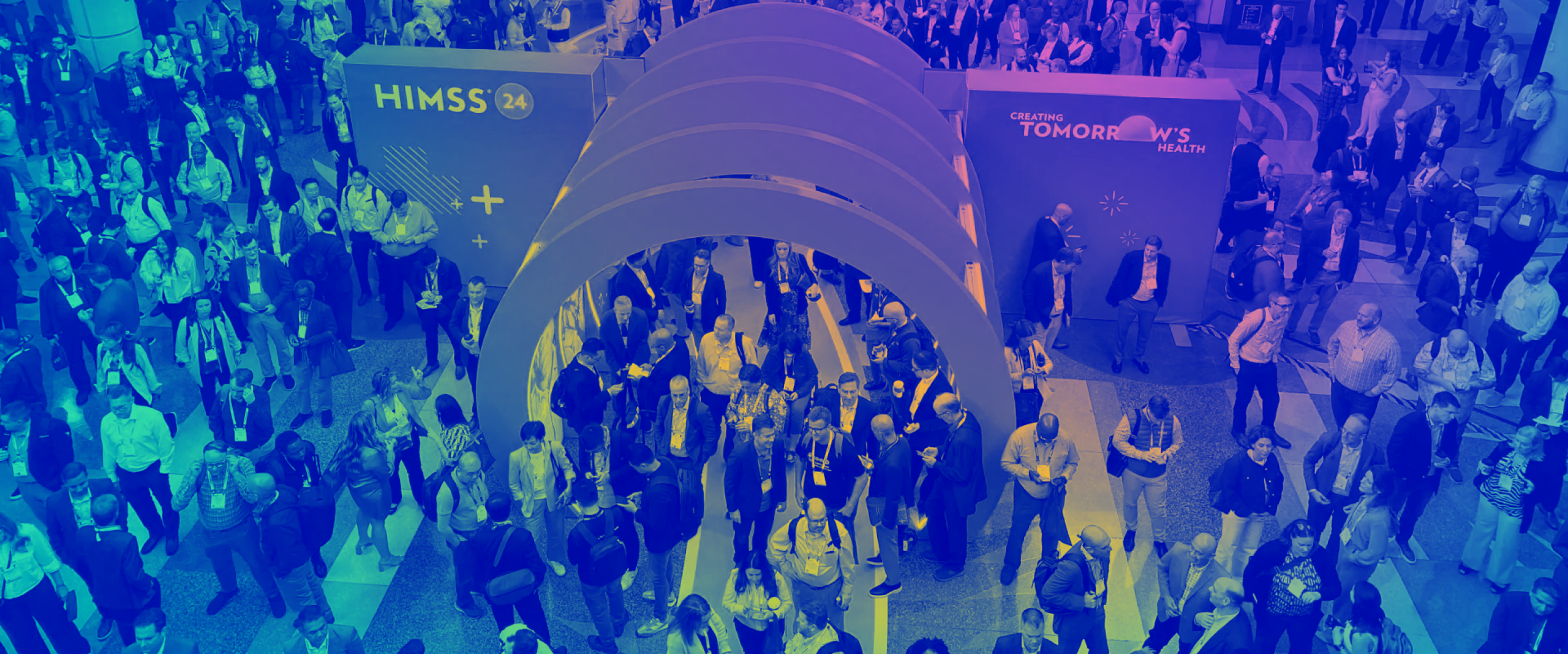
If HIMSS Global Health Conference & Exhibition and ViVE felt different on the surface, the underlying message was the same.
AI is no longer the conversation. Execution is.
At HIMSS 2026 in Las Vegas, that shift was unmistakable. The scale was larger, the conversations broader, and the ecosystem more complex than ViVE. But the conclusion healthcare leaders kept arriving at was consistent. AI is only as effective as the infrastructure it runs on.
This is where the conversation is evolving. The focus is shifting away from models and toward the operational environments required to support them.
For AiRISTA, that is not a new realization. It is the foundation of how we approach real-time infrastructure in healthcare.
HIMSS vs. ViVE: Different Audiences, Same Reality
ViVE brought together digital health leaders, innovators, and transformation-focused executives. HIMSS expanded that conversation to include IT, clinical leadership, policymakers, and enterprise-scale decision-makers.
Across both events, one theme consistently surfaced. Health systems are investing in AI, but struggling to operationalize it within complex, real-world environments.
At HIMSS, that challenge showed up more explicitly in conversations around:
- Interoperability and integration across core systems
- Data fragmentation across departments and platforms
- Workflow breakdowns between clinical and operational teams
- The gap between insight and real-time action
These aren’t AI problems. They’re infrastructure problems.
AI Has Moved Into Accountability Mode
At HIMSS 2026, AI was no longer framed as innovation. It was framed as expectation.
Across the exhibit hall and sessions, health systems were:
- Evaluating vendor performance
- Expanding pilots into enterprise strategies
- Being asked to justify ROI at the board level
With that pressure comes a clearer understanding of what is actually limiting progress. AI is exposing the constraints of existing operational environments.
Organizations that deploy AI on top of fragmented or delayed data are not seeing the outcomes they expect. Not because the models are flawed, but because the underlying data and systems are not built to support real-time decision-making.
This is the same pattern we saw at ViVE, now playing out at a larger and more operationally complex scale.
Read our ViVE 2026 takeaways →
Interoperability Isn’t Enough Without Real-Time Context
Interoperability dominated the HIMSS conversation, and for good reason.
Health systems are working to connect EHRs, clinical systems, and data platforms through standards like FHIR. That progress is critical.
But interoperability alone doesn’t solve the problem.
Most interoperability efforts are focused on clinical data such as documentation, records, and historical information. That data is essential, but it is not sufficient for real-time operations.
What AI increasingly depends on is something different: Real-time operational data.
- Where patients are in their care journey right now
- Where staff are deployed across units
- Where critical equipment is located and available
- How workflows are actually unfolding in real time
This is the data layer most health systems still lack. It is also the layer AI depends on to function effectively in operational environments.
The Rise of the Real-Time Health System (RTHS)
What HIMSS 2026 made clear is that healthcare is moving toward a new operating model: the Real-Time Health System (RTHS).
This is not about adding more dashboards. It is about enabling systems to sense, decide, and act in real time.
Delivering on that model requires three core capabilities:
- Continuous, real-time operational data
- Integrated systems that can interpret and share that data
- Workflow automation that can act on it immediately
Most organizations today are still operating in reactive or partially monitored environments. They can see what happened and, in some cases, predict what might happen next. But they still struggle to act in the moment.
That is the gap between visibility and execution.
Where AiRISTA Fits: The Operational Data Layer + Action Layer
This is where AiRISTA fits into the broader shift toward real-time healthcare infrastructure.
We don’t just provide RTLS for visibility. We provide the operational data layer and orchestration layer that AI depends on.
1. Real-Time Data Foundation
AiRISTA delivers continuous, accurate location intelligence across:
- Patients
- Staff
- Assets
This creates a structured, real-time operational dataset that can be used by AI models, analytics platforms, and downstream systems.
2. Workflow Intelligence & Automation
Through capabilities like rules-based automation, health systems can:
- Trigger workflows based on real-time events
- Automate alerts and escalations
- Coordinate resources dynamically
This is how organizations move from visibility to real-time execution.
3. Integration into the Broader Ecosystem
AiRISTA can integrate with EHRs, nurse call systems, capacity management platforms, and other core systems. This enables real-time data to flow across the enterprise and be acted on within existing workflows.
This is what allows AI to operate within the actual environment of care, not just within isolated analytics or reporting tools.
From Pilots to Performance: What Leaders Are Asking Now
At HIMSS, the most telling shift wasn’t what people were presenting — it was what they were asking.
The conversations at our booth consistently centered on:
- “How do we make our AI initiatives actually deliver results?”
- “How do we move beyond dashboards to real-time action?”
- “What infrastructure do we need to support this at scale?”
There’s a growing recognition that: you cannot scale AI without first scaling real-time operational visibility and automation. This is the inflection point.
The Competitive Divide Is Becoming Clear
HIMSS 2026 highlighted a widening gap between two types of organizations:
1. Those Investing in AI Alone
- Running pilots
- Generating insights
- Struggling to translate those insights into operational impact
2. Those Building Real-Time Infrastructure First
- Leveraging continuous operational data
- Automating workflows in real time
- Using AI to enhance systems that are already responsive
The second group isn’t just further along in AI adoption. They’re operating differently. They are becoming Real-Time Health Systems.
The Bottom Line
HIMSS 2026 reinforced what we saw at ViVE. AI is no longer the differentiator. Infrastructure is.
AI will continue to evolve, and organizations will continue to invest in new models and capabilities. But those investments will only translate into measurable outcomes when the underlying systems are built to support them.
The organizations that succeed in this next phase will focus on three things:
- Investing in continuous, real-time operational data
- Integrating that data across systems and workflows
- Enabling those systems to act on that data in the moment
This is what allows AI to move from insight to execution.
This is also the foundation AiRISTA is built to support.
Looking Ahead
The healthcare industry is entering a new phase. One defined not by experimentation, but by execution.
AI will play a critical role. But it will only deliver value in environments designed for real-time awareness, coordination, and action.
That environment is the Real-Time Health System.
Building it starts with real-time visibility. It expands through integration across systems. And it matures through workflow automation that enables action in the moment.
The organizations that invest in this foundation will not just adopt AI more effectively. They will operate differently.
About The Author


